In some European rivers, salinity has more than doubled between 1970 and 2024. A new research study published in Nature Communications analysed river data from 35 European countries using the GlobSalt database. The study found that, in 28 out of the 35 countries analysed, around half of European rivers and streams are affected by salinisation.
The Nature Communications study reveals the extent of freshwater salinisation across European rivers, identifying widespread salinisation and hotspots where management action is needed. Around half of European rivers and streams are affected by salinisation, while more than 23,000 km of the river network (around 2%) exceeds 1 mS/cm, a salinity level well above available international standards for the protection of aquatic life.
Global Salt Database
Based on analysis of data from the GlobSalt database around half of the European river network is affected by salinisation. Of the affected rivers 26% can be classified as having low level salinisation, 14% as moderate, 9% as severe, and 1% as extreme. The analysis also found that salinity exceeds drinking water limits in around 1% of the river network, and irrigation and industrial water quality limits in around 3%.
Strenghten monitoring and management
The international study was carried out by a team of international scientists, including researchers from the Joint Research Centre. The study provides a scientific basis for strengthening the monitoring and management of freshwater salinisation across Europe. Freshwater salinisation across Europe results from both natural factors and human activities. Climate, geology and hydrology influence river salinity, while the human footprint and land-use change are strongly associated with increased salinisation, underscoring the importance of managing anthropogenic pressures.
Lack of salinity standards
Higher levels of salinity reshape aquatic communities, threaten biodiversity and undermine water supplies, like drinking water, irrigation water and water for industry. “While recognised as a growing pressure on European freshwater ecosystems with mounting ecological and socioeconomic impacts, salinisation remains largely overlooked in existing EU and national water policies. Twenty-five years after the adoption of the EU Water Framework Directive (WFD), which requires Member States to achieve ‘good ecological and chemical status’ for surface waters, most countries still lack dedicated salinity standards and do not systematically monitor or report on salinity impacts”, the researchers state.
Salinisation due to climate change
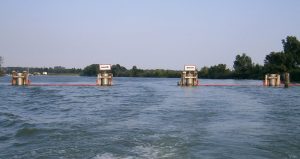
Due to climate change, longer periods of drought are becoming more frequent. When river water levels drop, seawater can enter deltas and push freshwater back upstream. This summer in the Italian Po-delta, seawater was able to penetrate 28,1 kilometres inwards. That is devastating for drinking water supplies and irrigation. work has been underway for years on solutions to prevent saltwater intrusion. In 2022, an innovative new anti-salt barrier was proposed to stop a salt wedge from rising along the dry river Po branches at the mouth of the Po di Pila, the main branch of the Po Delta. The mobile barrier separates fresh water from salt water making use of the fact that salt water is heavier than fresh water.
Study had identified new hotspots
For some rivers, such as the Ebro (Spain), Werra (Germany) and Oder (Poland), salinisation has been a problem for years. This Nature communications study identifies new hotspots, including the river basin of the Bega Veche in Romania and the Sió Canal in Hungary.