The European Commission has referred Finland to the Court of Justice of the European Union for failing to align its rules with European law that aimed at preventing major accidents, the Seveso III Directive. This directive applies to around 11,000 industrial installations in the European Union, for instance in the chemical and petrochemical industries, as well as the fuel wholesale and storage sectors. According to the latest official EU figures, Finland has 334 industrial establishments covered by the Seveso III Directive.
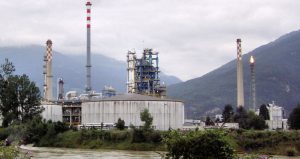
The decision by the European Commission was published in the Infringement Package published on 1 October. The Seveso III Directive aims to prevent major accidents involving dangerous substances, especially chemicals, and to limit their negative impact on human health and the environment, including water sources.
Lack of public access to information
Finland still has not correctly transposed the Directive, in particular with regard to inspections, public access to information, and access to justice. These are important matters affecting the effectiveness of national enforcement and the rights of citizens. If reports or inventories of dangerous substances include confidential or sensitive information related to public security or national defence Finland’s national rules do not enable Finnish authorities to disclose the non-sensitive or non-confidential parts of those reports or inventories.
Transparency versus confidentiality
Confidentiality is an important aspect of the European Directive on Critical Entities Resilience (CER) to protect national security. The directive entered into force in 2023 can sometimes conflict with the transparency criteria in other directives. In May 2026, seven EU countries were taken to court for failing to protect critical entities. In Europe, Finland is seen as a good example of how to protect critical entities. Besides access to information, Finland’s national rules do not ensure that, where possible, inspections of establishments are coordinated and combined with other inspections under European Union legislation. This can lead to fragmented oversight and less efficient enforcement.
Infringement procedure
The Commission sent a letter of formal notice to Finland in July 2020 and a reasoned opinion in December 2025. The Commission considers that the efforts by the Finnish authorities to take the necessary steps to amend the national legislation have been insufficient and is therefore referring Finland to the Court of Justice of the European Union.
Former industrial accident caused water pollution in Finland
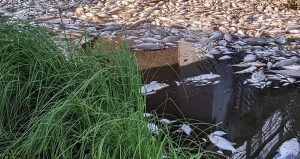
Finland has experienced industrial accidents at Seveso sites involving water pollution in the past. In 2009, a fire at the Abloy lock factory in Joensuu caused process chemicals from its electroplating facility to mix with firefighting water. According to the Finnish Safety and Chemicals Agency Tukes, the greatest environmental impacts of the accident were caused by process chemicals spreading into the environment with the contaminated firefighting water. Abloy was classified as a Seveso establishment.
Background of Seveso Directive
On 10 July 1976, a major industrial accident in Seveso, Italy led to thousands of people and vast areas being exposed to a cloud of toxic dioxin – a persistent environmental pollutant. Following this incident, the EU adopted the Seveso Directive, which entered into force in 1982. The new law led to a significant reduction in the risk of major accidents in the EU, reducing harm to people, property and nature. The Seveso Directive remains the backbone of the EU’s industrial safety framework, providing stricter risk assessments, safer land-use planning, stronger safety management and better emergency preparedness. Strict rules apply to installations handling large amounts of dangerous substances, for instance regarding inspections and access to information.